Galveston County, TX · Gulf of Mexico
Galveston Bay
The sprawling estuary behind Galveston Island — Texas's most productive inshore bay for redfish, spotted seatrout, and black drum, with flounder runs in fall and bull reds at the jetties. Fished from boats, wade flats, and the rock groins. Live tide and water temperature from Galveston Pier 21.
Live · updated
Top pick today
Summer Flounder — Marginal conditions for Summer Flounder.
Best conditions of 4 species tracked at Galveston Bay.
Atmosphere
Water
Sun & Moon
Today's Tides
| Time | Type | Height |
|---|---|---|
| 1:35 AM | Low | 0.0 ft |
| 10:53 AM | High | 1.5 ft |
Species at Galveston Bay
4 species tracked, ranked by today's conditions. The top pick is open below — tap any species to expand it, or a chip to focus.
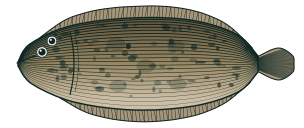
#1 Summer Flounder Marginal conditions for Summer Flounder. In season 52/100
What's helping
- outgoing tide — summer flounder prefers outgoing tide
- 15 mph wind — light chop — baitfish active, fish willing to feed
What's hurting
- 86°F water — above summer flounder's active range (58–75°f) — fish move deep
About. Paralichthys dentatus — Locally called "fluke." Flatfish that ambushes bait off sandy and mixed bottom. Drifting bucktails tipped with Gulp! or live minnows through Ocean City and Chincoteague inlets is the classic method.
Prefers. Water 58–75°F (ideal 65°F) · outgoing tide · depth 10–100 ft.
- Min size
- 15"
- Daily creel
- 5
Southern flounder: 15" minimum, 5/person/day; bag drops to 2 fish Nov 1–Dec 14 during the fall run.
Source: Texas regulations · verified 2026-05-29.
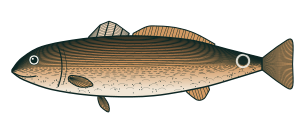
#2 Red Drum Skip the Red Drum trip today. In season 32/100
What's helping
- 15 mph wind — light chop — baitfish active, fish willing to feed
What's hurting
- 86°F water — above red drum's active range (65–85°f) — fish move deep
- outgoing tide — red drum prefers incoming tide
About. Sciaenops ocellatus — Also called channel bass, redfish, or (as juveniles) puppy drum. Summer and fall target around the lower Bay shoals and the Eastern Shore coastal bays. Big "bull reds" cruise the surf in fall.
Prefers. Water 65–85°F (ideal 75°F) · incoming tide · depth 3–20 ft.
- Min size
- 20"
- Max size
- 28"
- Daily creel
- 3
20–28" slot, 3/person/day. One oversized red drum over 28" per license year with a Red Drum Tag.
Source: Texas regulations · verified 2026-05-29.
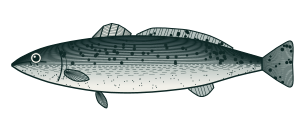
#2 Spotted Seatrout Skip the Spotted Seatrout trip today. In season 32/100
What's helping
- 15 mph wind — light chop — baitfish active, fish willing to feed
What's hurting
- 86°F water — above spotted seatrout's active range (60–85°f) — fish move deep
- outgoing tide — spotted seatrout prefers incoming tide
About. Cynoscion nebulosus — Popularly called "speckled trout" or "specks." Summer-fall target in the lower Bay grass beds and the Eastern Shore coastal bays. Topwater walkers at dawn and soft plastics on jigheads are standard.
Prefers. Water 60–85°F (ideal 72°F) · incoming tide · depth 3–15 ft.
- Min size
- 15"
- Max size
- 20"
- Daily creel
- 3
15–20" slot, 3/person/day. One trout over 28" per year with a Spotted Seatrout Tag.
Source: Texas regulations · verified 2026-05-29.
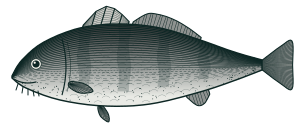
#2 Black Drum Skip the Black Drum trip today. In season 32/100
What's helping
- 15 mph wind — light chop — baitfish active, fish willing to feed
What's hurting
- 86°F water — above black drum's active range (55–85°f) — fish move deep
- outgoing tide — black drum prefers incoming tide
About. Pogonias cromis — The red drum’s heavier, bottom-grubbing cousin — a deep-bodied sciaenid that roots crabs and shellfish off mud and oyster bottom across the Gulf and South Atlantic. "Puppy drum" in the slot are excellent eating; the giant bull black drum that mass to spawn around passes and jetties in late winter and spring can top 80 lb. A staple of Louisiana and Texas inshore fishing alongside redfish and speckled trout.
Prefers. Water 55–85°F (ideal 72°F) · incoming tide · depth 2–40 ft.
- Min size
- 14"
- Max size
- 30"
- Daily creel
- 5
Texas: 14–30" slot, 5/person/day; one over 52" allowed and counts toward the bag.
Source: Texas regulations · verified 2026-06-03.
Location Info
Water Body
Gulf of Mexico
Region
Access
Pier, shore, and ramp
Jurisdiction
Texas
Coordinates
Notes
Texas: redfish 20–28" slot (3/day, one over-tag); seatrout 15–20" slot (3/day); black drum 14–30" slot. The fall flounder run is a Galveston tradition.
Local reports & rules for Galveston Bay: Texas Parks & Wildlife fishing report → · fish-consumption advisory →
Nearby Access Points
Frequently Asked
Do I need a fishing license to fish at Galveston Bay?
Yes (anglers age 16 and older). To fish at Galveston Bay you need the appropriate state fishing license. See the agency's current rules: the state agency website
What fish are commonly targeted at Galveston Bay?
Galveston Bay is listed on this site for 4 commonly-targeted species: Red Drum, Spotted Seatrout, Black Drum, Summer Flounder. Which species is currently in season and which is scoring highest today is shown in the per-species ranking on this page.
When is the best time to fish at Galveston Bay?
It depends more on the species and the day's conditions than on a fixed "best hour." Water temperature, weather, and — at tidal locations — the stage of the tide drive activity most. The per-species ranking on this page scores every target species at Galveston Bay against today's live conditions, so the fish near the top are your best bets right now; check back as conditions change through the day.
What kind of access does Galveston Bay have?
Galveston Bay has multiple access types — pier, shoreline, and at least one public boat ramp. Texas: redfish 20–28" slot (3/day, one over-tag); seatrout 15–20" slot (3/day); black drum 14–30" slot. The fall flounder run is a Galveston tradition.
Which state's fishing regulations apply at Galveston Bay?
state agency regulations apply at Galveston Bay. Size limits, creel limits, and seasonal closures are listed per species on each species page. Always confirm against the agency source linked from each regulation block — emergency closures can take effect mid-season.
Is Galveston Bay tidal water?
Yes. Galveston Bay sits on tidal water with a NOAA tide station nearby. Today's high/low timing is in the tide chart on this page.