Essex County, NY · Lake
Lake Champlain
A 120-mile lake on the New York–Vermont line, consistently rated among the best bass fisheries in the country — giant largemouth and smallmouth, plus lake trout, walleye, pike, and perch.
Live · updated
Top picks today
Smallmouth Bass & Walleye — tied at the top (81/100)
2 species tied for best of 6 tracked at Lake Champlain.
Atmosphere
Water
Sun & Moon
Species at Lake Champlain
6 species tracked, ranked by today's conditions. The top 2 (tied) are open below — tap any species to expand it, or a chip to focus.
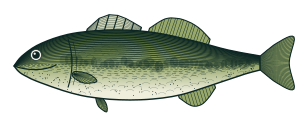
#1 Smallmouth Bass Great day to fish for Smallmouth Bass. In season 81/100
What's helping
- In the current report — smallmouth bass is showing up in this week's state fishing report for the area
- 13 mph wind — light chop — baitfish active, fish willing to feed
About. Micropterus dolomieu — Premier gamefish of the non-tidal Potomac, the Upper Susquehanna, and Deep Creek Lake. Pound-for-pound one of the hardest-fighting freshwater fish. Hits tubes, crayfish imitations, spinnerbaits, and topwater poppers.
Prefers. Water 55–78°F (ideal 68°F) · either tide · depth 3–30 ft.
- Min size
- 12"
- Daily creel
- 5
12" minimum, 5/day (black bass in aggregate).
Source: New York regulations · verified 2026-05-29.
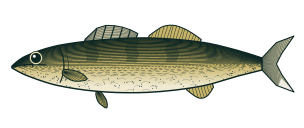
#1 Walleye Great day to fish for Walleye. In season 81/100
What's helping
- In the current report — walleye is showing up in this week's state fishing report for the area
- 13 mph wind — light chop — baitfish active, fish willing to feed
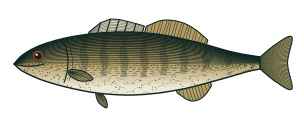
About. Sander vitreus — Maryland's premier cool-water gamefish. Deep Creek Lake is the flagship fishery; also found in the non-tidal Potomac and the Youghiogheny River. Low-light feeder — dusk, dawn, and overcast/windy days are prime. Jigs, crankbaits, and nightcrawler harnesses are standard.
Prefers. Water 50–72°F (ideal 62°F) · either tide · depth 10–40 ft.
- Min size
- 15"
- Daily creel
- 5
15" minimum, 5/day (Oneida and most waters).
Source: New York regulations · verified 2026-05-29.
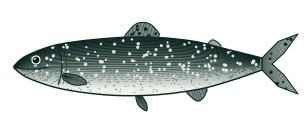
#3 Lake Trout Great day to fish for Lake Trout. In season 77/100
What's helping
- In the current report — lake trout is showing up in this week's state fishing report for the area
- 13 mph wind — light chop — baitfish active, fish willing to feed
About. Salvelinus namaycush — The native deepwater char of the Great Lakes and cold northern lakes. Holds in cold, deep water through summer and moves shallow to reefs in spring and fall. Targeted by deep trolling, jigging, and from shore early and late in the season.
Prefers. Water 40–52°F (ideal 48°F) · either tide · depth 30–200 ft.
- Min size
- 21"
- Daily creel
- 3
21" minimum, 3/day on most lakes (Champlain, Cayuga and the Finger Lakes have specific rules).
Source: New York regulations · verified 2026-05-29.
#4 Yellow Perch Great day to fish for Yellow Perch. In season 71/100
What's helping
- In the current report — yellow perch is showing up in this week's state fishing report for the area
- 13 mph wind — light chop — baitfish active, fish willing to feed
What's hurting
- incoming tide — yellow perch prefers slack tide
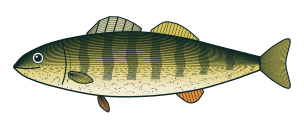
About. Perca flavescens — Late-winter and early-spring favorite. Schools up in tidal tributaries for the pre-spawn run in February and March, taking small minnows, shad darts, and small jigs. A classic Eastern Shore "neds" fishery.
Prefers. Water 45–70°F (ideal 58°F) · slack tide · depth 5–30 ft.
#5 Largemouth Bass Workable day for Largemouth Bass. In season 65/100
What's helping
- 13 mph wind — light chop — baitfish active, fish willing to feed
About. Micropterus salmoides — Most popular gamefish in MD non-tidal waters. Ambush predator around cover — lily pads, submerged timber, docks, grass edges. Hits plastics, spinnerbaits, jigs, and topwater across the season.
Prefers. Water 55–85°F (ideal 72°F) · either tide · depth 3–25 ft.
- Min size
- 12"
- Daily creel
- 5
12" minimum, 5/day (black bass in aggregate).
Source: New York regulations · verified 2026-05-29.
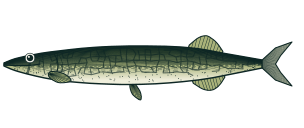
#5 Chain Pickerel Workable day for Chain Pickerel. In season 65/100
What's helping
- 13 mph wind — light chop — baitfish active, fish willing to feed
About. Esox niger — Native toothy predator of mill ponds, blackwater rivers, and grassy shorelines — especially common on the Eastern Shore. Hits spinners, spoons, and minnow plugs aggressively. Cold-weather fishery when bass have shut down.
Prefers. Water 45–80°F (ideal 60°F) · either tide · depth 3–15 ft.
Location Info
Local reports & rules for Lake Champlain: New York DEC fishing & regulations → · fish-consumption advisory →
Nearby Access Points
Frequently Asked
Do I need a fishing license to fish at Lake Champlain?
Yes (anglers age 16 and older). To fish at Lake Champlain you need the appropriate state fishing license. See the agency's current rules: the state agency website
What fish are commonly targeted at Lake Champlain?
Lake Champlain is listed on this site for 6 commonly-targeted species: Largemouth Bass, Smallmouth Bass, Lake Trout, Walleye, and 2 more. Which species is currently in season and which is scoring highest today is shown in the per-species ranking on this page.
When is the best time to fish at Lake Champlain?
It depends more on the species and the day's conditions than on a fixed "best hour." Water temperature, weather, and — at tidal locations — the stage of the tide drive activity most. The per-species ranking on this page scores every target species at Lake Champlain against today's live conditions, so the fish near the top are your best bets right now; check back as conditions change through the day.
What kind of access does Lake Champlain have?
Lake Champlain has multiple access types — pier, shoreline, and at least one public boat ramp.
Which state's fishing regulations apply at Lake Champlain?
state agency regulations apply at Lake Champlain. Size limits, creel limits, and seasonal closures are listed per species on each species page. Always confirm against the agency source linked from each regulation block — emergency closures can take effect mid-season.
Is Lake Champlain tidal water?
No. Lake Champlain is non-tidal — water level varies with rainfall, seasonal flow, and (where applicable) upstream dam releases rather than tidal exchange.