Centre County, PA · Inland River
Penns Creek
Pennsylvania's largest limestone-influenced freestone — central-PA water famous for its wild brown trout and the spectacular green drake hatch each spring. A big, brawling creek with catch-and-release fly water and miles of public access.
Live · updated
Top picks today
Rainbow Trout & Brown Trout — tied at the top (23/100)
2 species tied for best of 2 tracked at Penns Creek.
Atmosphere
Water
Sun & Moon
Species at Penns Creek
2 species tracked, ranked by today's conditions. The top 2 (tied) are open below — tap any species to expand it, or a chip to focus.
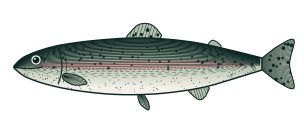
#1 Rainbow Trout Skip the Rainbow Trout trip today. In season 23/100
What's helping
- 12 mph wind — light chop — baitfish active, fish willing to feed
What's hurting
- Thunderstorms — get off the water immediately when storms approach
About. Oncorhynchus mykiss — The most heavily stocked trout in Maryland. Put-and-take fisheries across the state plus holdover/wild fish in Western MD streams (Savage, Youghiogheny tailwater, Gunpowder). Takes PowerBait, small spinners, and standard dry/nymph patterns.
Prefers. Water 45–68°F (ideal 55°F) · either tide · depth 3–20 ft.
- Daily creel
- 5
Pennsylvania: 5 trout/day in the regular season; the West Branch Delaware and other special-regulation waters are reduced-creel / artificial-only. Confirm the section.
Source: Pennsylvania regulations · verified 2026-06-03.
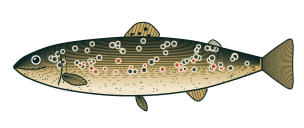
#1 Brown Trout Skip the Brown Trout trip today. In season 23/100
What's helping
- 12 mph wind — light chop — baitfish active, fish willing to feed
What's hurting
- Thunderstorms — get off the water immediately when storms approach
About. Salmo trutta — Naturally reproduces in the Gunpowder River tailwater (Loch Raven below Prettyboy) and several Western MD streams; also heavily stocked. Typically more wary than rainbows. Classic mayfly hatches on the Gunpowder — sulphurs, BWOs, caddis. Streamer-eaters after dark.
Prefers. Water 45–68°F (ideal 55°F) · either tide · depth 3–25 ft.
- Daily creel
- 5
Pennsylvania: 5 trout/day; special-regulation reaches reduced.
Source: Pennsylvania regulations · verified 2026-06-03.
Location Info
Water Body
Inland River
Access
Pier, shore, and ramp
Jurisdiction
Pennsylvania
Coordinates
Notes
Pennsylvania: special-regulation (Catch-and-Release / All-Tackle) areas on Penns Creek — confirm the section before keeping fish.
Local reports & rules for Penns Creek: PA Fish & Boat Commission fishing & regulations → · fish-consumption advisory →
Nearby Access Points
Frequently Asked
Do I need a fishing license to fish at Penns Creek?
Yes (anglers age 16 and older). To fish at Penns Creek you need the appropriate state fishing license. See the agency's current rules: the state agency website
What fish are commonly targeted at Penns Creek?
Penns Creek is listed on this site for 2 commonly-targeted species: Rainbow Trout, Brown Trout. Which species is currently in season and which is scoring highest today is shown in the per-species ranking on this page.
When is the best time to fish at Penns Creek?
It depends more on the species and the day's conditions than on a fixed "best hour." Water temperature, weather, and — at tidal locations — the stage of the tide drive activity most. The per-species ranking on this page scores every target species at Penns Creek against today's live conditions, so the fish near the top are your best bets right now; check back as conditions change through the day.
What kind of access does Penns Creek have?
Penns Creek has multiple access types — pier, shoreline, and at least one public boat ramp. Pennsylvania: special-regulation (Catch-and-Release / All-Tackle) areas on Penns Creek — confirm the section before keeping fish.
Which state's fishing regulations apply at Penns Creek?
state agency regulations apply at Penns Creek. Size limits, creel limits, and seasonal closures are listed per species on each species page. Always confirm against the agency source linked from each regulation block — emergency closures can take effect mid-season.
Is Penns Creek tidal water?
No. Penns Creek is non-tidal — water level varies with rainfall, seasonal flow, and (where applicable) upstream dam releases rather than tidal exchange.