St. George Island

Franklin County, FL

St. George Island offers public shoreline access on the Gulf of Mexico in Franklin County. Common targets include common snook, tarpon, red drum, spotted seatrout, sheepshead, summer flounder, and bluefish.

Live · updated

Common Snook — Common Snook harvest is closed today.

Best conditions of 7 species tracked at St. George Island.

100 /100
ideal
Air Temp
83°F
Mostly Sunny
Wind
10 to 15 mph
SE
Rain
0%
Saturday
Pressure
30.03 inHg
Steady · last 6h
Water Temp
80°F
Tidal waters
Tide
outgoing
Sunrise
6:38 AM
Sunset
8:36 PM
Moon · 70%
waning gibbous
Time Type Height
1:59 AM Low -0.2 ft
9:55 AM High 1.5 ft
1:54 PM Low 1.3 ft
6:30 PM High 1.6 ft

7 species tracked, ranked by today's conditions. The top pick is open below — tap any species to expand it, or a chip to focus.

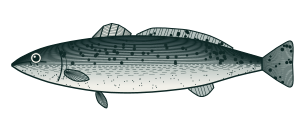
#1 Common Snook Common Snook harvest is closed today. Out of season 100/100
Harvest closed

Common Snook is outside any documented open harvest period at this location. Check the state agency before fishing.

What's helping

  • 80°F water — right in common snook's ideal range
  • outgoing tide — common snook prefers outgoing tide
  • 15 mph wind — light chop — baitfish active, fish willing to feed

About. Centropomus undecimalis — Florida's premier inshore gamefish — an ambush predator that stacks up around passes, bridges, docks, and mangrove edges, especially on a moving tide. Extremely cold-sensitive; hard freezes cause snook kills. Explosive strikes on live bait, jigs, and topwater.

Prefers. Water 68–88°F (ideal 78°F) · outgoing tide · depth 2–20 ft.

Min size
28"
Max size
33"
Daily creel
1

Gulf: 28–33" slot, 1/day, snook permit required. Harvest open Mar 1–Apr 30 and Sep 1–Nov 30; catch-and-release the rest of the year.

Source: Florida regulations · verified 2026-05-29.

#2 Tarpon Tarpon is catch-and-release only today. Catch & release 80/100
Harvest closed — catch-and-release permitted

Tarpon may not be kept today, but targeting and releasing is legal under current regulations. See method restrictions below.

What's helping

  • 80°F water — right in tarpon's ideal range
  • 15 mph wind — light chop — baitfish active, fish willing to feed

What's hurting

  • outgoing tide — tarpon prefers incoming tide

About. Megalops atlanticus — The Silver King — a 100-plus-pound migratory gamefish prized for spectacular leaping fights. A near-pure catch-and-release fishery in Florida; famous runs include Boca Grande Pass and the Keys bridges. Feeds hard around moving tides and the new and full moons.

Prefers. Water 74–90°F (ideal 80°F) · incoming tide · depth 3–30 ft.

Daily creel
0

Catch-and-release only. A $50 tarpon tag is required only for an IGFA record attempt; tarpon over 40" may not be removed from the water.

Source: Florida regulations · verified 2026-05-29.

#3 Red Drum Workable day for Red Drum. In season 68/100

What's helping

  • 80°F water — inside red drum's active range
  • 15 mph wind — light chop — baitfish active, fish willing to feed

What's hurting

  • outgoing tide — red drum prefers incoming tide

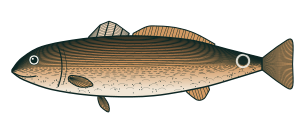
About. Sciaenops ocellatus — Also called channel bass, redfish, or (as juveniles) puppy drum. Summer and fall target around the lower Bay shoals and the Eastern Shore coastal bays. Big "bull reds" cruise the surf in fall.

Prefers. Water 65–85°F (ideal 75°F) · incoming tide · depth 3–20 ft.

Min size
18"
Max size
27"
Daily creel
1

18–27" slot, 1/person/day (vessel limits vary by region; catch-and-release only in the Indian River Lagoon). Harvest prohibited in federal waters.

Source: Florida regulations · verified 2026-05-29.

#3 Spotted Seatrout Workable day for Spotted Seatrout. In season 68/100

What's helping

  • 80°F water — inside spotted seatrout's active range
  • 15 mph wind — light chop — baitfish active, fish willing to feed

What's hurting

  • outgoing tide — spotted seatrout prefers incoming tide

About. Cynoscion nebulosus — Popularly called "speckled trout" or "specks." Summer-fall target in the lower Bay grass beds and the Eastern Shore coastal bays. Topwater walkers at dawn and soft plastics on jigheads are standard.

Prefers. Water 60–85°F (ideal 72°F) · incoming tide · depth 3–15 ft.

Min size
15"
Max size
19"
Daily creel
3

15–19" slot (one fish over 19" per vessel allowed); bag is 2–5/day depending on FWC management zone, with seasonal closures in some zones. Confirm your zone.

Source: Florida regulations · verified 2026-05-29.

#3 Sheepshead Workable day for Sheepshead. In season 68/100

What's helping

  • 80°F water — inside sheepshead's active range
  • 15 mph wind — light chop — baitfish active, fish willing to feed

What's hurting

  • outgoing tide — sheepshead prefers slack tide

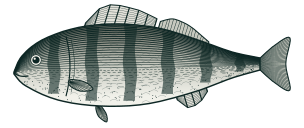
About. Archosargus probatocephalus — Structure-oriented crustacean eater with famously human-like teeth. VA piers, jetties, and the rocks and pilings of the Chesapeake Bay Bridge-Tunnel are the classic targets. Fiddler crabs, sand fleas, or small pieces of shrimp on a knocker rig right against the structure. Expect to lose tackle.

Prefers. Water 60–82°F (ideal 72°F) · slack tide · depth 5–40 ft.

Min size
12"
Daily creel
8

12" minimum, 8/person/day (50-per-vessel limit in March–April).

Source: Florida regulations · verified 2026-05-29.

#3 Bluefish Workable day for Bluefish. In season 68/100

What's helping

  • 80°F water — inside bluefish's active range
  • 15 mph wind — light chop — baitfish active, fish willing to feed

What's hurting

  • outgoing tide — bluefish prefers incoming tide

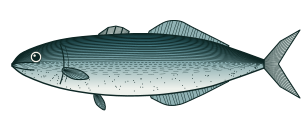
About. Pomatomus saltatrix — Toothy, aggressive pelagic predator. "Snapper blues" invade the lower Bay and coastal bays in summer; bigger choppers along the Atlantic coast. Hits metal jigs, topwater, and cut bait savagely — wire leaders recommended.

Prefers. Water 60–80°F (ideal 70°F) · incoming tide · depth 5–50 ft.

Min size
12"
Daily creel
10

12" fork-length minimum, 10/person/day on the Gulf coast (including Monroe County).

Source: Florida regulations · verified 2026-05-29.

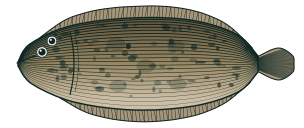
#7 Summer Flounder Marginal conditions for Summer Flounder. In season 52/100

What's helping

  • outgoing tide — summer flounder prefers outgoing tide
  • 15 mph wind — light chop — baitfish active, fish willing to feed

What's hurting

  • 80°F water — above summer flounder's active range (58–75°f) — fish move deep

About. Paralichthys dentatus — Locally called "fluke." Flatfish that ambushes bait off sandy and mixed bottom. Drifting bucktails tipped with Gulp! or live minnows through Ocean City and Chincoteague inlets is the classic method.

Prefers. Water 58–75°F (ideal 65°F) · outgoing tide · depth 10–100 ft.

Min size
14"
Daily creel
5

Florida flounder: 14" minimum, 5/person/day. Closed Oct 15–Nov 30.

Source: Florida regulations · verified 2026-05-29.

Water Body

Gulf of Mexico

Region

Emerald Coast

Access

Shoreline access

Jurisdiction

Florida

Coordinates

29.7212, -84.7479

Local reports & rules for St. George Island: Florida FWC fishing & regulations → · fish-consumption advisory →

Do I need a fishing license to fish at St. George Island?

Yes (anglers age 16 and older). To fish at St. George Island you need the appropriate state fishing license. See the agency's current rules: the state agency website

What fish are commonly targeted at St. George Island?

St. George Island is listed on this site for 7 commonly-targeted species: Common Snook, Tarpon, Red Drum, Spotted Seatrout, and 3 more. Which species is currently in season and which is scoring highest today is shown in the per-species ranking on this page.

When is the best time to fish at St. George Island?

It depends more on the species and the day's conditions than on a fixed "best hour." Water temperature, weather, and — at tidal locations — the stage of the tide drive activity most. The per-species ranking on this page scores every target species at St. George Island against today's live conditions, so the fish near the top are your best bets right now; check back as conditions change through the day.

What kind of access does St. George Island have?

St. George Island has shoreline / wading access. There is no pier or boat ramp at this location.

Which state's fishing regulations apply at St. George Island?

state agency regulations apply at St. George Island. Size limits, creel limits, and seasonal closures are listed per species on each species page. Always confirm against the agency source linked from each regulation block — emergency closures can take effect mid-season.

Is St. George Island tidal water?

Yes. St. George Island sits on tidal water with a NOAA tide station nearby. Today's high/low timing is in the tide chart on this page.

esc