Berkeley County, SC · Reservoir
Lake Moultrie
The lower Santee Cooper lake near Charleston — giant blue catfish, striped bass, largemouth, and crappie across open water and the diversion canal.
Live · updated
Top pick today
Striped Bass — Marginal conditions for Striped Bass.
Best conditions of 5 species tracked at Lake Moultrie.
Dense Smoke Advisory issued July 21 at 5:11PM EDT until July 22 at 10:00AM EDT by NWS Charleston SC
Atmosphere
Water
Sun & Moon
Species at Lake Moultrie
5 species tracked, ranked by today's conditions. The top pick is open below — tap any species to expand it, or a chip to focus.
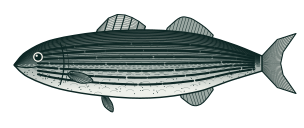
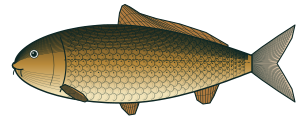
#1 Striped Bass Marginal conditions for Striped Bass. In season 53/100
What's helping
- incoming tide — striped bass prefers incoming tide
- 12 mph wind — light chop — baitfish active, fish willing to feed
What's hurting
- NWS alert active — check the alert before heading out
About. Morone saxatilis — Maryland's state fish. Anadromous — runs into Bay tributaries to spawn each spring. Targeted by trolling, jigging, live-lining, and surf casting. Locally called "rockfish."
Prefers. Water 50–72°F (ideal 62°F) · incoming tide · depth 5–35 ft.
Last verified 54 days ago on 2026-05-29. Open source page →
- Min size
- 26"
- Daily creel
- 3
Santee Cooper: 26" minimum, 3/day; harvest Oct 1–Jun 15, catch-and-release in the summer closure.
Source: South Carolina regulations · verified 2026-05-29.
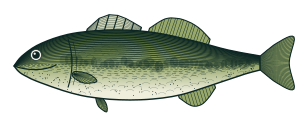
#2 Largemouth Bass Marginal conditions for Largemouth Bass. In season 43/100
What's helping
- 12 mph wind — light chop — baitfish active, fish willing to feed
What's hurting
- NWS alert active — check the alert before heading out
About. Micropterus salmoides — Most popular gamefish in MD non-tidal waters. Ambush predator around cover — lily pads, submerged timber, docks, grass edges. Hits plastics, spinnerbaits, jigs, and topwater across the season.
Prefers. Water 55–85°F (ideal 72°F) · either tide · depth 3–25 ft.
Last verified 54 days ago on 2026-05-29. Open source page →
- Min size
- 14"
- Daily creel
- 5
14" minimum, 5/day (Santee Cooper and most reservoirs).
Source: South Carolina regulations · verified 2026-05-29.
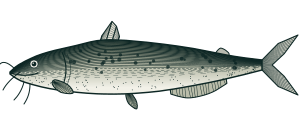
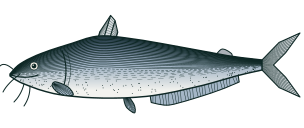
#2 Blue Catfish Marginal conditions for Blue Catfish. In season 43/100
What's helping
- 12 mph wind — light chop — baitfish active, fish willing to feed
What's hurting
- NWS alert active — check the alert before heading out
About. Ictalurus furcatus — Invasive apex predator, now abundant throughout the tidal Potomac, Patuxent, and Nanticoke. MDDNR actively encourages harvest. Caught on cut bait (bunker, white perch, gizzard shad) fished on bottom. 50+ lb fish are routine on the Potomac.
Prefers. Water 55–85°F (ideal 72°F) · either tide · depth 10–60 ft.
Last verified 54 days ago on 2026-05-29. Open source page →
- Daily creel
- 25
Santee Cooper: 25/day combined, only one over 36".
Source: South Carolina regulations · verified 2026-05-29.
#2 Channel Catfish Marginal conditions for Channel Catfish. In season 43/100
What's helping
- 12 mph wind — light chop — baitfish active, fish willing to feed
What's hurting
- NWS alert active — check the alert before heading out
About. Ictalurus punctatus — Native catfish of MD non-tidal rivers, reservoirs, and farm ponds. Bottom-feeder that takes chicken liver, stinkbait, nightcrawlers, and cut bait. Most active at night and in warm water.
Prefers. Water 60–85°F (ideal 75°F) · either tide · depth 5–30 ft.
Last verified 54 days ago on 2026-05-29. Open source page →
- Daily creel
- 25
Santee Cooper: 25/day (catfish combined), no more than two over 32".
Source: South Carolina regulations · verified 2026-05-29.
#2 Crappie Marginal conditions for Crappie. In season 43/100
What's helping
- 12 mph wind — light chop — baitfish active, fish willing to feed
What's hurting
- NWS alert active — check the alert before heading out
About. Pomoxis spp. — Covers both black crappie (P. nigromaculatus) and white crappie (P. annularis). Schooling panfish around brush, docks, and submerged timber. Spring pre-spawn is the prime season — small minnows and 1/16-oz jigs are the go-to.
Prefers. Water 50–80°F (ideal 65°F) · either tide · depth 3–20 ft.
Last verified 54 days ago on 2026-05-29. Open source page →
- Daily creel
- 20
20/day (8" minimum on Lake Murray and some waters).
Source: South Carolina regulations · verified 2026-05-29.
Location Info
Water Body
Reservoir
Access
Pier, shore, and ramp
Jurisdiction
South Carolina
Coordinates
Local reports & rules for Lake Moultrie: South Carolina DNR fishing report → · fish-consumption advisories (EPA directory) →
Nearby Access Points
Frequently Asked
Do I need a fishing license to fish at Lake Moultrie?
Yes (anglers age 16 and older). To fish at Lake Moultrie you need the appropriate state fishing license. See the agency's current rules: the state agency website
What fish are commonly targeted at Lake Moultrie?
Lake Moultrie is listed on this site for 5 commonly-targeted species: Largemouth Bass, Blue Catfish, Striped Bass, Channel Catfish, and 1 more. Which species is currently in season and which is scoring highest today is shown in the per-species ranking on this page.
When is the best time to fish at Lake Moultrie?
It depends more on the species and the day's conditions than on a fixed "best hour." Water temperature, weather, and — at tidal locations — the stage of the tide drive activity most. The per-species ranking on this page scores every target species at Lake Moultrie against today's live conditions, so the fish near the top are your best bets right now; check back as conditions change through the day.
What kind of access does Lake Moultrie have?
Lake Moultrie has multiple access types — pier, shoreline, and at least one public boat ramp.
Which state's fishing regulations apply at Lake Moultrie?
state agency regulations apply at Lake Moultrie. Size limits, creel limits, and seasonal closures are listed per species on each species page. Always confirm against the agency source linked from each regulation block — emergency closures can take effect mid-season.
Is Lake Moultrie tidal water?
No. Lake Moultrie is non-tidal — water level varies with rainfall, seasonal flow, and (where applicable) upstream dam releases rather than tidal exchange.