Sandy Point State Park

Anne Arundel County, MD

A 786-acre state park on the upper Chesapeake Bay near the Bay Bridge. Public boat ramps, fishing pier, and ~1.5 miles of fishable shoreline. One of the most accessible striper spots in Maryland.

Live · updated

Also a beach day? Swim conditions and water-quality advisories at Sandy Point State Park on itsabeachday.com →

Bluefish & Spotted Seatrout — tied at the top (43/100)

2 species tied for best of 5 tracked at Sandy Point State Park.

43 /100
ok
Air Temp
96°F
Mostly Sunny then Showers And Thunderstorms Likely
Wind
3 to 8 mph
SW
Rain
58%
Friday
Pressure
Steady
6-hour trend
Water Temp
78°F
Tidal waters
Tide
incoming
Seas
1 ft
Nearest buoy wave height
Sunrise
5:39 AM
Sunset
8:31 PM
Moon · 11%
waning crescent
Time Type Height
2:26 AM High 1.6 ft
9:00 AM Low 0.7 ft
1:53 PM High 1.1 ft
8:13 PM Low 0.2 ft

5 species tracked, ranked by today's conditions. The top 2 (tied) are open below — tap any species to expand it, or a chip to focus.

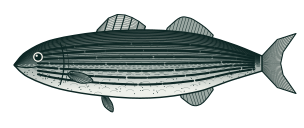
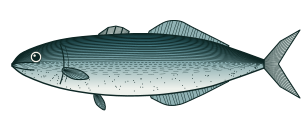
#1 Bluefish Marginal conditions for Bluefish. In season 43/100

What's helping

  • 78°F water — inside bluefish's active range
  • incoming tide — bluefish prefers incoming tide
  • 8 mph wind — light chop — baitfish active, fish willing to feed

What's hurting

  • Thunderstorms — get off the water immediately when storms approach

About. Pomatomus saltatrix — Toothy, aggressive pelagic predator. "Snapper blues" invade the lower Bay and coastal bays in summer; bigger choppers along the Atlantic coast. Hits metal jigs, topwater, and cut bait savagely — wire leaders recommended.

Prefers. Water 60–80°F (ideal 70°F) · incoming tide · depth 5–50 ft.

Regulations may be out of date

Last verified 51 days ago on 2026-04-22. Open source page →

Min size
8"
Daily creel
5

Chesapeake Bay: 8-inch minimum. 5 per person on shore or private boat; 7 per person on for-hire (charter) boats. Federal ASMFC bluefish allocation — limit may change annually.

Source: Maryland tidal regulations · verified 2026-04-22.

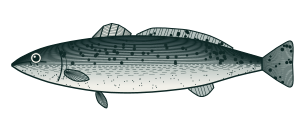
#1 Spotted Seatrout Marginal conditions for Spotted Seatrout. In season 43/100

What's helping

  • 78°F water — inside spotted seatrout's active range
  • incoming tide — spotted seatrout prefers incoming tide
  • 8 mph wind — light chop — baitfish active, fish willing to feed

What's hurting

  • Thunderstorms — get off the water immediately when storms approach

About. Cynoscion nebulosus — Popularly called "speckled trout" or "specks." Summer-fall target in the lower Bay grass beds and the Eastern Shore coastal bays. Topwater walkers at dawn and soft plastics on jigheads are standard.

Prefers. Water 60–85°F (ideal 72°F) · incoming tide · depth 3–15 ft.

Regulations may be out of date

Last verified 51 days ago on 2026-04-22. Open source page →

Min size
14"
Daily creel
4

Chesapeake Bay: 14-inch minimum, 4 per day. Thermal-stress winter die-offs can trigger emergency closures; check MDDNR before mid-winter trips.

Source: Maryland tidal regulations · verified 2026-04-22.

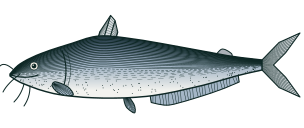
#3 Blue Catfish Skip the Blue Catfish trip today. In season 29/100

What's helping

  • 78°F water — inside blue catfish's active range
  • 8 mph wind — light chop — baitfish active, fish willing to feed

What's hurting

  • Thunderstorms — get off the water immediately when storms approach

About. Ictalurus furcatus — Invasive apex predator, now abundant throughout the tidal Potomac, Patuxent, and Nanticoke. MDDNR actively encourages harvest. Caught on cut bait (bunker, white perch, gizzard shad) fished on bottom. 50+ lb fish are routine on the Potomac.

Prefers. Water 55–85°F (ideal 72°F) · either tide · depth 10–60 ft.

Regulations may be out of date

Last verified 51 days ago on 2026-04-22. Open source page →

Daily creel
0

Invasive species in Maryland tidal waters. No minimum size, no creel limit, open year-round. MDDNR encourages anglers to harvest rather than release. Not listed in the Chesapeake Bay seasons/sizes/limits table because no restrictions apply.

Source: Maryland tidal regulations · verified 2026-04-22.

#4 White Perch Skip the White Perch trip today. In season 23/100

What's helping

  • 78°F water — inside white perch's active range
  • 8 mph wind — light chop — baitfish active, fish willing to feed

What's hurting

  • incoming tide — white perch prefers outgoing tide
  • Thunderstorms — get off the water immediately when storms approach

About. Morone americana — Smaller cousin of the striped bass and arguably the Bay's most popular panfish. Schools heavily in tidal rivers and creeks; hits bottom rigs with bloodworms, grass shrimp, or small jigs. Spring spawning run into the freshwater ends of tributaries is the marquee fishery.

Prefers. Water 50–78°F (ideal 65°F) · outgoing tide · depth 3–25 ft.

Regulations may be out of date

Last verified 51 days ago on 2026-04-22. Open source page →

Daily creel
0

No minimum size when caught with hook and line; 8-inch minimum for other legal gear. No daily creel limit. Open year-round in Chesapeake Bay and tidal tributaries.

Source: Maryland tidal regulations · verified 2026-04-22.

#5 Striped Bass Skip the Striped Bass trip today. In season 7/100

What's helping

  • incoming tide — striped bass prefers incoming tide
  • 8 mph wind — light chop — baitfish active, fish willing to feed

What's hurting

  • 78°F water — above striped bass's active range (50–72°f) — fish move deep
  • Thunderstorms — get off the water immediately when storms approach

About. Morone saxatilis — Maryland's state fish. Anadromous — runs into Bay tributaries to spawn each spring. Targeted by trolling, jigging, live-lining, and surf casting. Locally called "rockfish."

Prefers. Water 50–72°F (ideal 62°F) · incoming tide · depth 5–35 ft.

Regulations may be out of date

Last verified 51 days ago on 2026-04-22. Open source page →

Min size
19"
Max size
24"
Daily creel
1

Chesapeake Bay recreational regulations (2026). January 1–April 30 and December 6–31 are catch-and-release only (no harvest) — the April C&R period was restored in 2026 for the first time since 2019. August 1–31 is closed to all targeting to protect fish from thermal stress. Spawning rivers (Choptank, Chester, Manokin, Nanticoke, Patuxent, Transquaking, Wicomico) and the Upper Bay spawning area / Susquehanna Flats are closed to targeting March 1–May 31. Circle hooks required when fishing with bait. Potomac River main stem is managed separately by the Potomac River Fisheries Commission. Atlantic coast regulations (28–31 in slot, year-round) differ.

Source: Maryland tidal regulations · verified 2026-04-22.

Water Body

Chesapeake Bay

Access

Pier, shore, and ramp

Jurisdiction

Maryland tidal

Coordinates

39.0113, -76.3988

Notes

Day-use entry fee. Fishing pier free. Ramps fill on summer weekends — arrive early.

What anglers are reporting

From the Maryland DNR weekly fishing report, published May 27, 2026 · 15 days old — a newer report may be available.

Middle Bay

Fishing for striped bass at the Bay Bridge piers has been good this past week and should continue. Boats have been anchoring up-current of the bridge piers on the east side and drifting live spot and assorted baits back to the pier bases. Other anglers are positioning close to the piers and casting soft plastic jigs to the pier bases with good success. Striped bass fishing is very good for light tackle anglers casting and jigging in many traditional locations in the middle Bay. Eastern Bay, Poplar Island, Thomas Point, and the mouth of the Choptank River are just a few locations where casting paddletails and soft plastic jigs is working well.

Species mentioned: spot, striped bass

Excerpts are anecdotal and reflect a single week's observations from DNR biologists and reporting anglers — not predictions. Use as one signal among many; verify against current conditions before planning a trip.

Local reports & rules for Sandy Point State Park: Maryland DNR fishing report → · trout stocking schedule → · fish-consumption advisory →

Do I need a fishing license to fish at Sandy Point State Park?

Yes (anglers age 16 and older). To fish at Sandy Point State Park you need a Maryland Chesapeake Bay & Coastal Sport License issued by MD DNR. Anglers may instead qualify for the free Maryland Saltwater Angler Registration in some circumstances (e.g., guest on a boat carrying a Bay & Coastal Sport Boat Decal, or holder of a Virginia saltwater license). See the agency's current rules: https://dnr.maryland.gov/pages/service_fishing_license.aspx

What fish are commonly targeted at Sandy Point State Park?

Sandy Point State Park is listed on this site for 5 commonly-targeted species: Striped Bass, White Perch, Bluefish, Blue Catfish, and 1 more. Which species is currently in season and which is scoring highest today is shown in the per-species ranking on this page.

When is the best time to fish at Sandy Point State Park?

It depends more on the species and the day's conditions than on a fixed "best hour." Water temperature, weather, and — at tidal locations — the stage of the tide drive activity most. The per-species ranking on this page scores every target species at Sandy Point State Park against today's live conditions, so the fish near the top are your best bets right now; check back as conditions change through the day.

What kind of access does Sandy Point State Park have?

Sandy Point State Park has multiple access types — pier, shoreline, and at least one public boat ramp. Day-use entry fee. Fishing pier free. Ramps fill on summer weekends — arrive early.

Which state's fishing regulations apply at Sandy Point State Park?

Maryland Department of Natural Resources (DNR) tidal regulations apply at Sandy Point State Park. Size limits, creel limits, and seasonal closures are listed per species on each species page. Always confirm against the agency source linked from each regulation block — emergency closures can take effect mid-season.

Is Sandy Point State Park tidal water?

Yes. Sandy Point State Park sits on tidal water with a NOAA tide station nearby. Today's high/low timing is in the tide chart on this page.

Is there parking or an entry fee at Sandy Point State Park?

Day-use entry fee. Fishing pier free. Ramps fill on summer weekends — arrive early.

esc